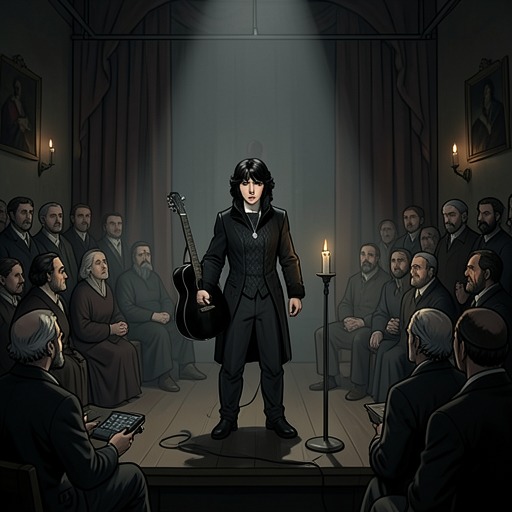
Ozzy Osbourne
Lords of ChaosOzzy Osbourne, the singer of Black Sabbath, helped give the band its unsettling musical character through a haunting vocal style. The book places him at the center of a contrast that shaped Black Sabbath’s public identity: the group’s music and imagery invoked evil, while its lyrics did not amount to a serious Satanic philosophy.
Identity and Musical Role
Black Sabbath slowed the blues-based rock framework of its contemporaries into a lurching, sinister pace, matching the band’s themes of insanity, war, and alienation. Osbourne’s haunting wail was a defining part of that sound. The band’s presentation reinforced it: its album art brought Satanic imagery into mainstream pop culture, including scenes of demons attacking sleeping people on releases such as Sabbath, Bloody Sabbath.
Occult Interest and Its Limits
The band’s members spoke about the occult, and Osbourne later pursued the subject in his solo career with Mr. Crowley, a song presented as a paean to Aleister Crowley, the “Great Beast.” Yet the book separates this interest and imagery from the beliefs expressed in Black Sabbath’s lyrics. A closer reading, it argues, finds not a sustained Satanic doctrine but an almost Christian fear of demons and sorcery.
Image and Legacy
Black Sabbath’s dark reputation took hold despite the gap between its menacing presentation and the religious fear the book identifies in its lyrics. Along with Led Zeppelin, the band became associated with a sinister current that endured, and its performances drew arena audiences around the world even without press support. Osbourne’s voice and the band’s imagery thus belong to a wider story of how rock could project an enduring occult aura without its songs necessarily endorsing Satanism.